
Borrowed Voice and Authorship
Cyrano de BergeracThis thread explores how the play separates words from their apparent speaker and asks who owns an intimacy created by hidden authorship.
increasing Bearing strength in each event
 decreasing
Bearing strength in each eventdecreasingA Letter Reassigned
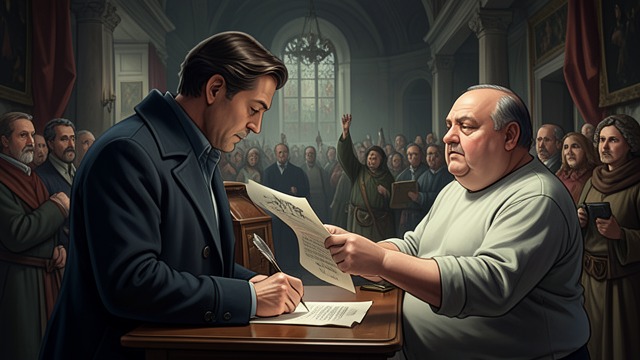
A Letter Reassigned
The writer’s private voice
Cyrano writes a love letter from genuine feeling, then gives it to Christian when he learns whom Roxane loves.
Authorship concealed
The letter helps Christian speak, but begins a sustained confusion between the person who writes and the person who receives the response.
Speech from the Shadows
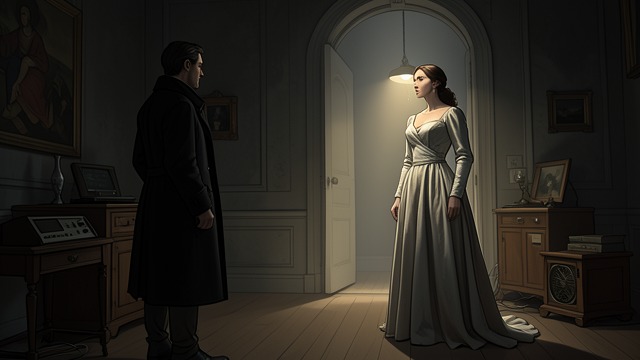
Speech from the Shadows
A voice detached from a face
Cyrano speaks to Roxane while remaining hidden, giving voice to feelings Christian cannot express.
Words acquire a body
Roxane imagines Christian behind the speech. The scene makes language emotionally powerful while showing how readily a listener can assign words to the wrong speaker.
Letters Across the Siege
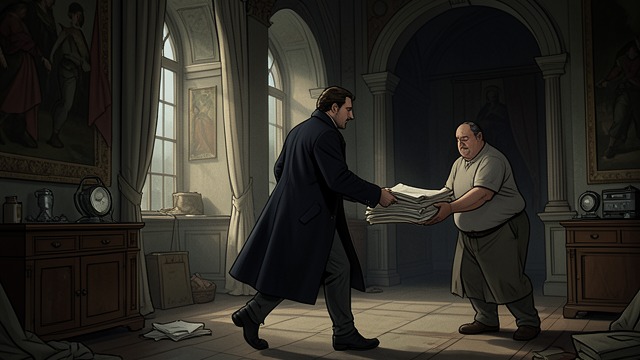
Letters Across the Siege
The absent lover writes
Cyrano crosses enemy lines to send letters in Christian’s name, making the correspondence more regular and intimate than Christian himself could manage.
An author’s risk
The letters carry real feeling, even while their signature conceals the writer. Cyrano risks his life to preserve an intimacy whose benefits go to another man.
A Demand for Attribution
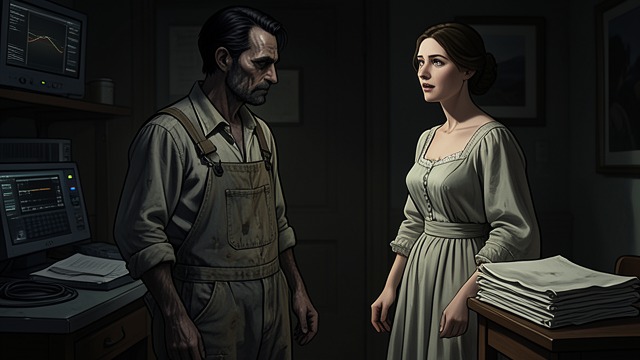
A Demand for Attribution
Christian recognizes the voice
After Roxane declares her love for the soul in the letters, Christian realizes the emotional truth belongs to Cyrano.
Choice interrupted
He insists that Roxane must know the author and choose freely. His demand reframes concealed authorship as a question of honesty, not merely generosity.
The Memory of a Voice
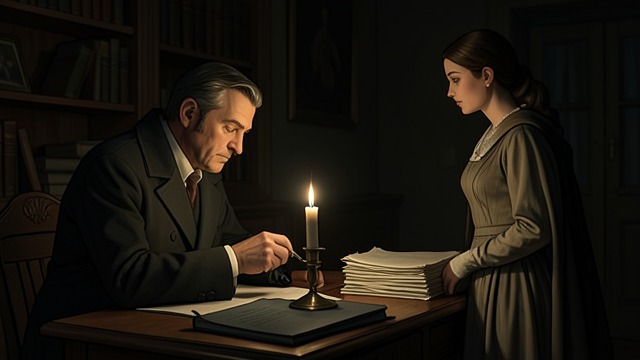
The Memory of a Voice
Recognition through reading
Cyrano reads Christian’s letter in darkness, relying on memory rather than sight. Roxane recognizes the voice she once heard beneath her balcony.
Authorship restored
The hidden writer is finally acknowledged, but only when Cyrano is dying. The delay turns a question of credit into a tragedy of lost time and unspoken love.
Act II, at Ragueneau's pastry shop
Act III, during the balcony declaration
During the month-long siege of Arras
At Arras, just before the final attack
Fourteen years later, at twilight
